

This week has seen a lot of chatter on the all-female group going on a Bezos Blue Origin rocket ride to space (around 11 minutes in total). But to quote culture critic Blakely Thornton on this: “You cannot rebrand oligarchy as feminism. You cannot rebrand your vanity as altruism”. It’s less about science, and more an expensive trip.
There are far bigger issues to address to support the future of women in space, who are actually working to push science forward, from astronauts to those working in STEM fields. Beginning with the fact that a 2019 women astronaut space walk had to postpone because it didn’t have enough suits that actually fit women. We have much bigger issues to solve. But first, a little history…
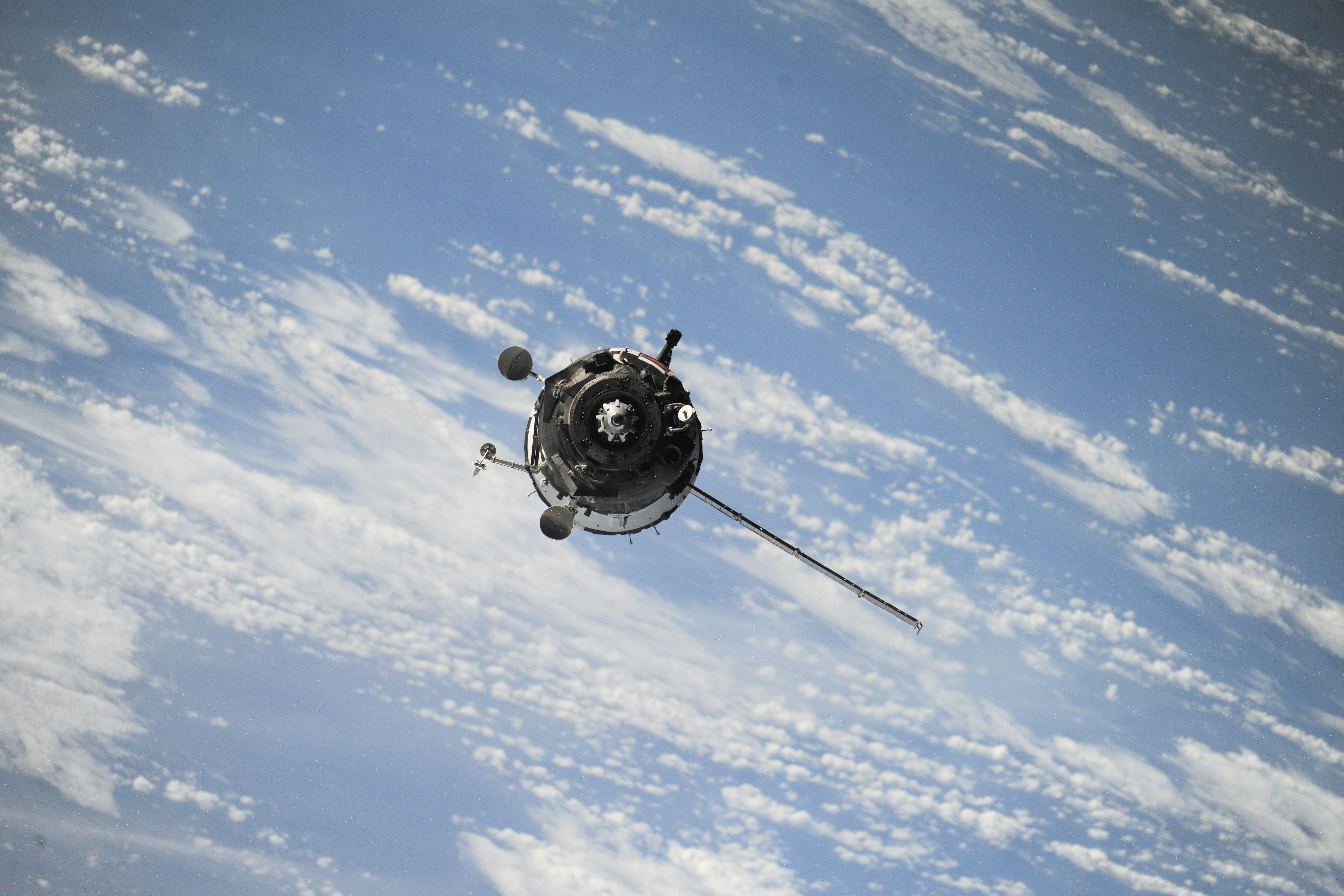
Breaking Barriers Beyond Earth: The Pioneering Women of Space
For most of modern history, space exploration was viewed through a lens dominated by male figures in silver suits and mission control rooms full of men. But behind the scenes—and eventually in front of the cameras—women have been pushing the boundaries of what’s possible in space science, technology, and exploration for decades.
Their journey to the stars hasn’t been easy, but it’s a story of persistence, brilliance, and trailblazing progress.
The Early Hidden Figures
In the 1960s, while the world watched male astronauts launch into space, a group of African-American women mathematicians at NASA—Katherine Johnson, Dorothy Vaughan, and Mary Jackson—were doing the complex calculations that made those missions possible. Their contributions were long overlooked but became more widely recognized after the book and 2016 film Hidden Figures brought their story into the spotlight.
These women, despite segregation and gender discrimination, laid the foundation for future space missions with groundbreaking work in orbital mechanics and aeronautical engineering.
The First Woman in Space: Valentina Tereshkova
In 1963, Soviet cosmonaut Valentina Tereshkova became the first woman to travel to space, orbiting Earth 48 times aboard Vostok 6. A factory worker turned cosmonaut, her solo mission at age 26 was both a political statement and a genuine achievement in aerospace history. It would be 19 years before another woman followed her into space.
The American Breakthrough: Sally Ride
In 1983, Dr. Sally Ride made history as the first American woman in space aboard the Challenger. A physicist and astronaut, Ride faced sexist media questions about makeup and motherhood, but she remained focused on her mission. Her legacy includes a powerful impact on STEM education—she later founded Sally Ride Science to encourage girls to pursue science and math.
Spacewalkers and Commanders
By the 1990s and 2000s, women were doing more than riding along—they were leading missions and making history:
Mae Jemison (1992) became the first African-American woman in space.
Eileen Collins became the first female Space Shuttle pilot (1995) and later, the first to command a shuttle mission (1999).
Peggy Whitson, a biochemist and NASA astronaut, holds the U.S. record for the most cumulative time in space: 665 days.
In 2019, Christina Koch and Jessica Meir conducted the first all-female spacewalk—something once deemed logistically impossible due to the lack of properly sized suits.
Women Scientists & Engineers Behind the Scenes
While astronauts are the most visible, many women have driven space exploration from behind the scenes:
Margaret Hamilton led the development of onboard flight software for the Apollo missions. Her work helped land the first humans on the Moon.
Nancy Grace Roman, known as the “Mother of Hubble,” was one of NASA’s first female executives and a key force behind the Hubble Space Telescope.
Swati Mohan, an Indian-American aerospace engineer, was the face of NASA’s Mars 2020 mission during Perseverance's landing.
The Next Frontier
Today, women are a growing force in space, from NASA and Space X to global agencies like the European Space Agency and ISRO. The upcoming Artemis missions, which aim to return humans to the Moon, promise that the next person to walk on the lunar surface will likely be a woman.
NASA’s goal is clear: to ensure that future space missions reflect the diversity of Earth itself.
Why This Matters
Representation in space isn’t just symbolic. When girls see women excelling in space exploration, it breaks down the barrier of “what’s possible.” Women bring critical perspectives to science and leadership—whether designing space habitats, programming robotics, or studying the effects of microgravity on the human body.
The sky is no longer the limit—it’s just the beginning.